
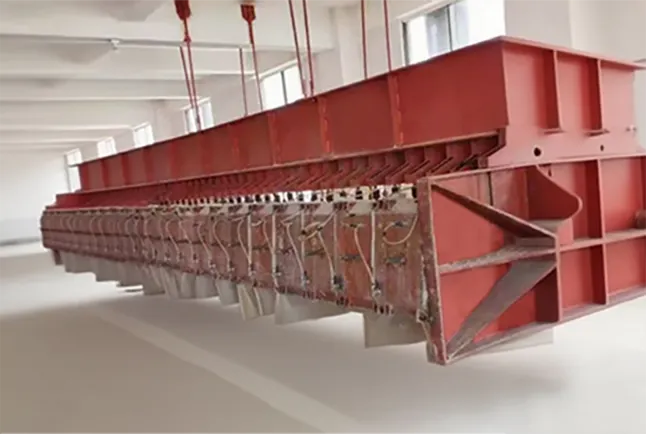
In the global sanitary ware industry, production efficiency and consistency are no longer optional — they are the foundation of competitiveness. As labor costs continue to rise and quality expectations increase in export markets, more ceramic factories are upgrading from traditional plaster mold casting to high-pressure casting systems.
However, choosing the right high-pressure casting system is not simply a matter of comparing prices. It is a strategic decision that affects production capacity, product quality, energy consumption, and long-term profitability. Below is a practical guide to help sanitary ware manufacturers make a well-informed investment.
Why High-Pressure Casting Is Becoming the Industry Standard
Traditional gravity casting relies heavily on manual operation and long mold drying cycles. While the initial investment is lower, production efficiency and consistency are limited.
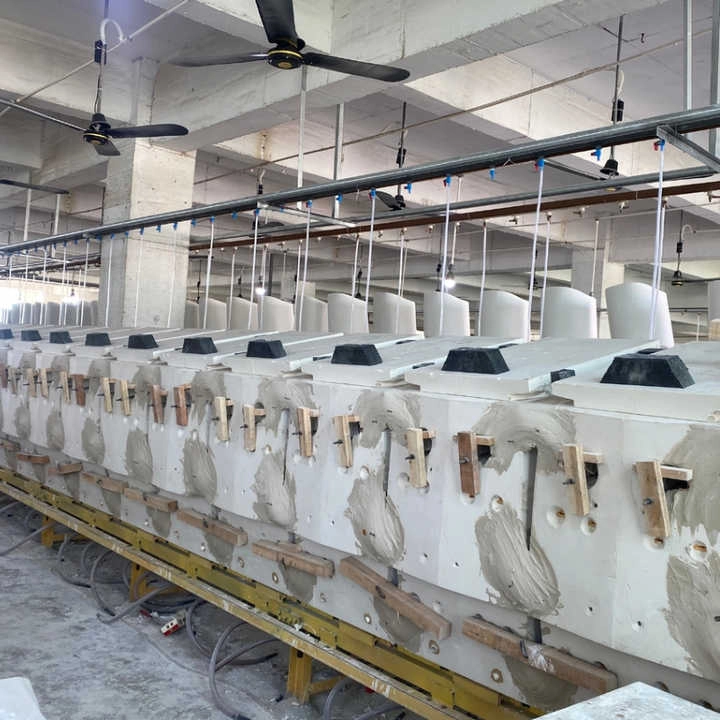
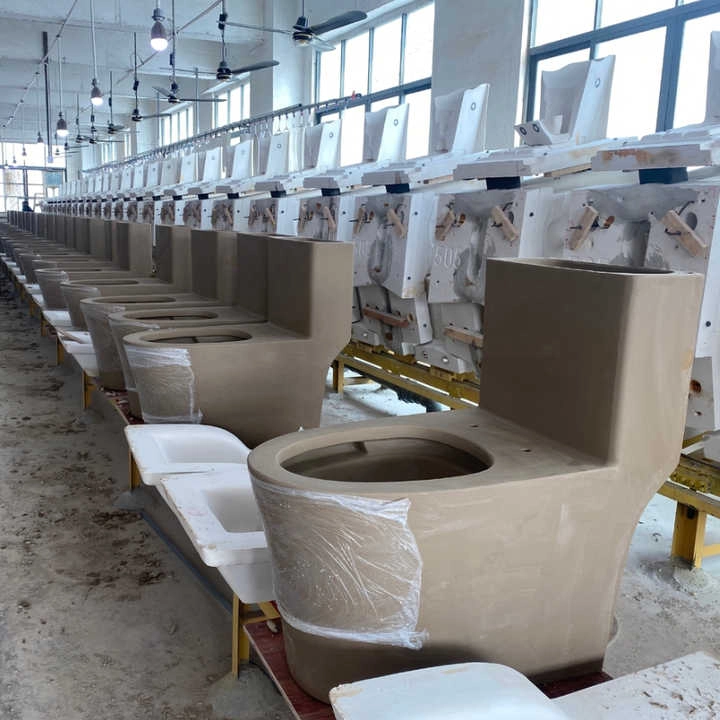
High-pressure casting, by contrast, uses controlled pressure to accelerate water absorption through porous resin molds. This dramatically shortens casting time and improves density uniformity. For complex sanitary ware products such as one-piece toilets and wall-hung toilets, pressure casting ensures more stable internal structure formation, especially in trapway areas.
Factories in technologically advanced markets such as Germany and Italy have already adopted high-pressure casting as a mainstream production method. For manufacturers targeting export markets, aligning with this production standard strengthens credibility and competitiveness.
Start With a Clear Production Strategy
Before selecting equipment, a factory must clearly define its development direction.
Are you producing large volumes of standardized toilet models?
Are you planning to serve OEM customers with frequent model changes?
Is your goal to expand output within the next three years?
High-pressure casting systems are modular and can be configured differently depending on production scale. A growing factory should choose a scalable system that allows additional stations to be integrated later, rather than replacing the entire line during expansion.
Choosing equipment that matches long-term planning prevents repeated capital expenditure and operational disruption.
Look Beyond Cycle Time: Focus on Stability
Many equipment suppliers emphasize fast cycle time — and indeed, high-pressure casting can reduce forming time to 20–40 minutes depending on product type. But speed alone does not guarantee efficiency.
The real question is: Can the system maintain stable pressure and repeatable results over thousands of cycles?
An advanced system should provide:
- Accurate pressure control
- Stable slurry feeding
- Automated demolding
- Consistent wall thickness
Unstable pressure or uneven slurry distribution may lead to hidden defects that only appear during firing, increasing scrap rate. Therefore, when evaluating suppliers, request actual production case data rather than theoretical specifications.
Mold Technology Determines Product Precision
In sanitary ware production, molds are not just accessories — they are central to product accuracy and yield rate.
High-pressure casting systems typically use resin molds that enable rapid water absorption and long service life. However, mold structure design must accommodate:
- Complex internal cavities
- Multi-part mold assembly
- Easy replacement and maintenance
- Fast changeover between models
For factories supplying international projects or premium brands, dimensional precision and repeatability are critical. A well-designed mold system reduces post-processing work and ensures consistent flushing performance for toilets.
Automation Is an Investment in Management Efficiency
Automation does more than reduce labor; it improves production transparency and management control.
A modern high-pressure casting system may include:
- PLC-controlled operation
- Real-time pressure monitoring
- Automatic slurry circulation
- Data recording for traceability
This level of automation reduces operator dependency and ensures standardized production processes. For factories exporting to markets with strict compliance requirements, traceability data can become a valuable advantage during quality audits.
Automation also helps address labor shortages — an issue affecting manufacturing industries in countries such as India and Brazil.
Material Efficiency and Cost Control
One often overlooked factor is slurry system design. A well-engineered slurry circulation and filtration system maintains consistent density and minimizes material waste.
Poor slurry control can result in:
- Uneven thickness
- Increased pinholes
- Higher scrap rate
Over time, even small inefficiencies significantly impact production cost per piece. Therefore, evaluate not only machine structure but also the integrated slurry preparation and recycling system.
Energy Consumption and Long-Term ROI
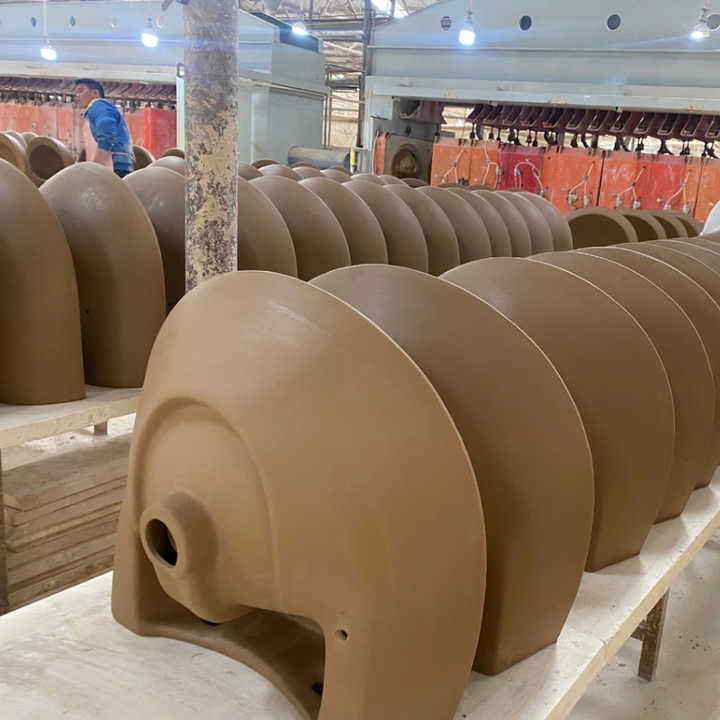
High-pressure casting systems require electricity, compressed air, and water circulation. While initial energy consumption may appear high compared to traditional casting, the calculation must consider output per unit time.
Higher productivity, lower scrap rate, and reduced labor often offset energy costs. A reliable supplier should provide data on energy consumption per piece, allowing you to calculate real ROI instead of focusing solely on equipment price.
When evaluated over a 5–10 year period, high-pressure casting typically delivers strong returns for medium and large-scale sanitary ware factories.
After-Sales Support Is Critical
Even the most advanced equipment requires technical support. For overseas factories, downtime can result in delayed shipments and financial penalties.
Before finalizing a supplier, confirm:
- Installation and commissioning support
- Operator training programs
- Spare parts supply speed
- Remote technical assistance capability
YUTAI supplier with international project experience understands cross-border service challenges and can provide more reliable support.
Choosing the Right Machinery Partner
Ultimately, selecting a high-pressure casting system is about choosing the right machinery partner. Beyond technical specifications, consider:
- Experience in sanitary ware applications
- Successful global projects
- Custom engineering capability
- Understanding of toilet casting complexity
A knowledgeable ceramic machinery manufacturer will analyze your product structure, factory layout, and output targets before recommending a solution — rather than simply selling standard equipment.
Conclusion
Investing in a high-pressure casting system is a strategic upgrade for any sanitary ware factory seeking higher efficiency, consistent quality, and stronger global competitiveness.
The right system should align with your long-term production plan, provide stable and repeatable performance, integrate advanced automation, and ensure cost-effective operation over time.
As an experienced ceramic machinery manufacturer specializing in sanitary ware production systems, we provide customized high-pressure casting solutions based on your product structure, factory layout, and target output. From technical evaluation and line planning to installation and after-sales support, our team ensures your investment delivers measurable production improvements.
If you are planning to build a new sanitary ware factory or upgrade your existing casting line, contact us today for a professional production assessment and tailored equipment proposal.