
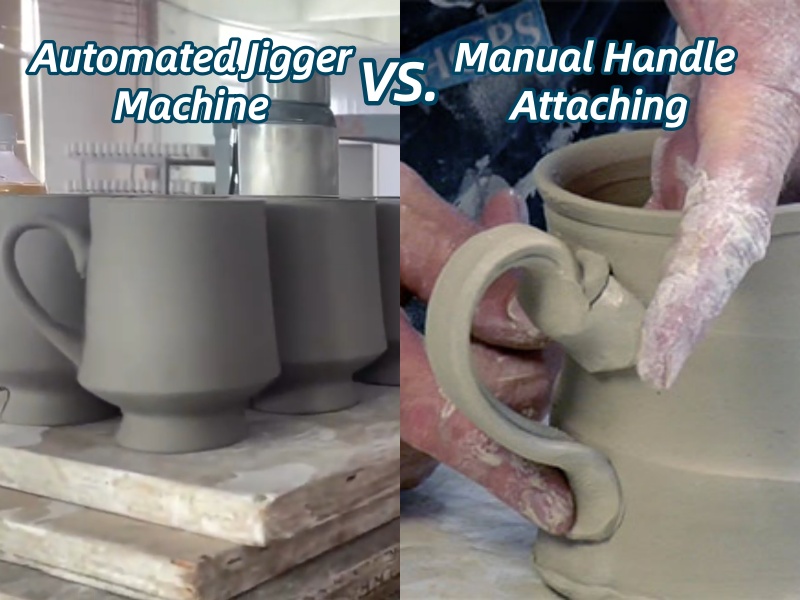
في العالم التقليدي لتصنيع السيراميك، لطالما كانت “اللمسة الإنسانية” في عالم تصنيع السيراميك نقطة فخر. ومع ذلك، ومع زيادة الطلب العالمي وارتفاع تكاليف العمالة، يواجه أصحاب المصانع قرارًا حاسمًا: هل يجب عليك الالتزام بالربط اليدوي للمقبض اليدوي أو الانتقال إلى خط التجهيز والتجميع الآلي?
إذا كنت تتطلع إلى توسيع نطاق إنتاجك والحفاظ على جودة ثابتة، فإن فهم الاختلافات الفنية والمالية بين هاتين الطريقتين أمر ضروري.
عنق الزجاجة إرفاق المقبض اليدوي
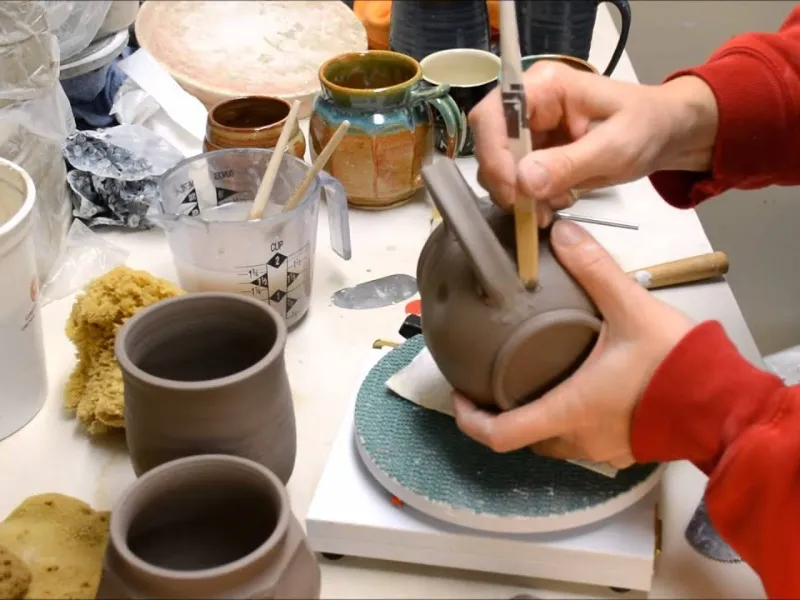
لعقود من الزمن، كانت الطريقة اليدوية هي معيار الصناعة. يقوم الحرفي الماهر بوضع زلة على مقبض مسبوق الصب ويصله بجسم الكوب المصنوع من الجلد الصلب.
المحترفون
- استثمار مبدئي منخفض: لا حاجة إلى آلات باهظة الثمن.
- المرونة: يمكنك التبديل بسهولة بين تصميمات المقابض المختلفة دون الحاجة إلى إعادة تجهيزها.
السلبيات
- عدم الاتساق: يؤدي الخطأ البشري إلى اختلافات في وضع المقبض وقوة الوصلة، مما يتسبب في حدوث تشققات أثناء الإطلاق.
- تبعية العمالة: إن معدلات الدوران المرتفعة وارتفاع تكلفة العمالة الماهرة تجعل من الصعب الحفاظ على إنتاج ثابت.
- سرعة بطيئة: يمكن للعامل إنهاء عدد محدود فقط من القطع في الساعة، مما يخلق اختناقًا كبيرًا في الطلبات ذات الحجم الكبير.
الحل الحديث: خطوط التشكيل والتجفيف المتكاملة
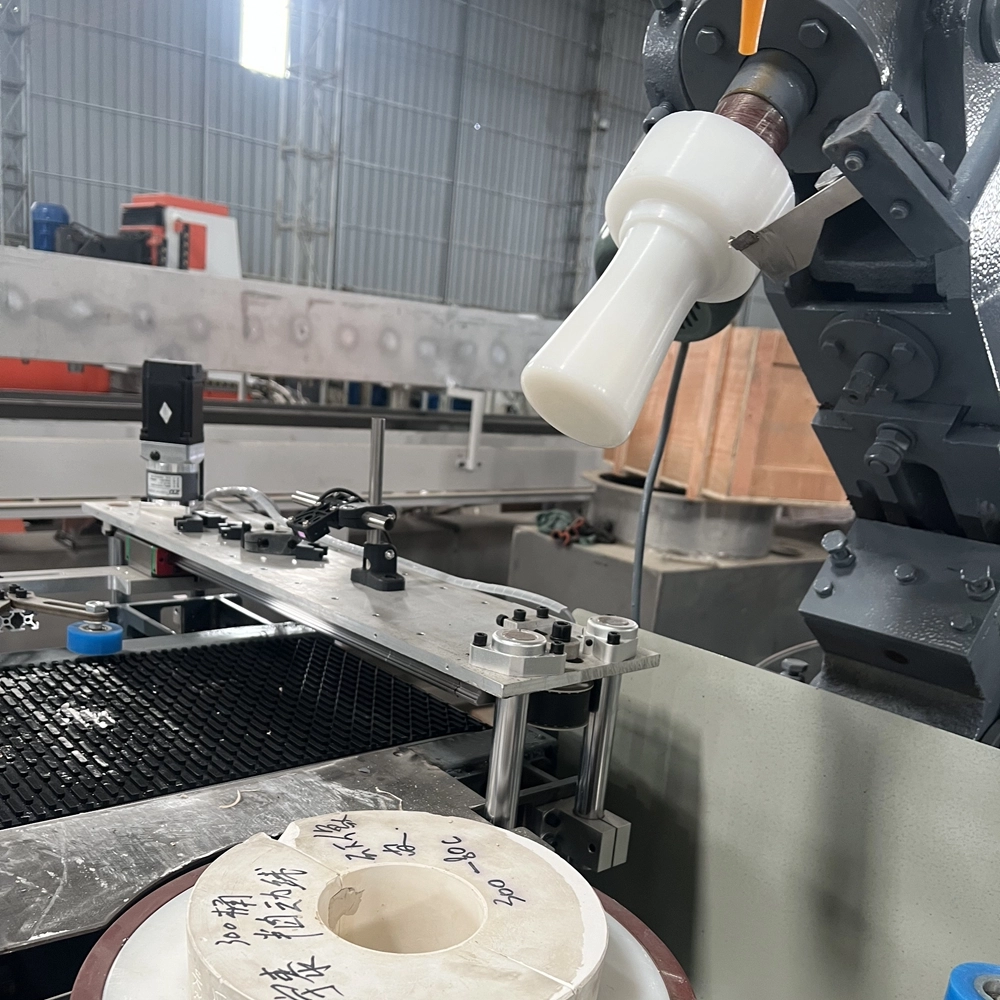
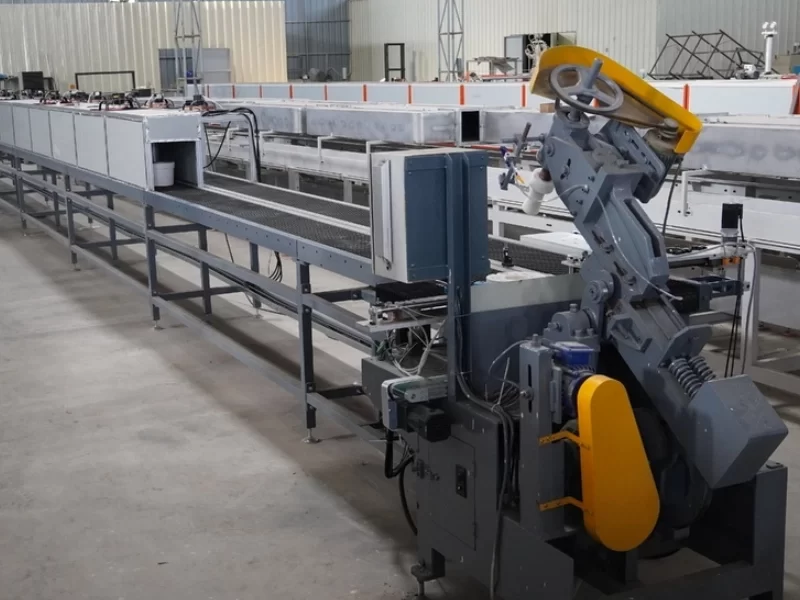
أحدث منتجاتنا ماكينة الحفر الآلي ليست مجرد أداة تشكيل؛ إنها نظام إنتاج كامل. فهي تدمج محطة التشكيل مع نفق تجفيف متزامن وسير ناقل متزامن.
كيف يعمل:
- التشكيل الدقيق: يضمن الإبريق الآلي أن يكون لكل كوب أو وعاء سُمك جدار وكثافة متطابقين.
- تجفيف متزامن: بدلاً من الانتظار لساعات، تنتقل القطع على الفور إلى ناقل تجفيف متكامل. يستخدم هذا النفق درجة حرارة متحكم فيها وتدفق هواء متحكم فيه للوصول بالصلصال إلى حالة “الجلد الصلب” المثالية في جزء صغير من الوقت.
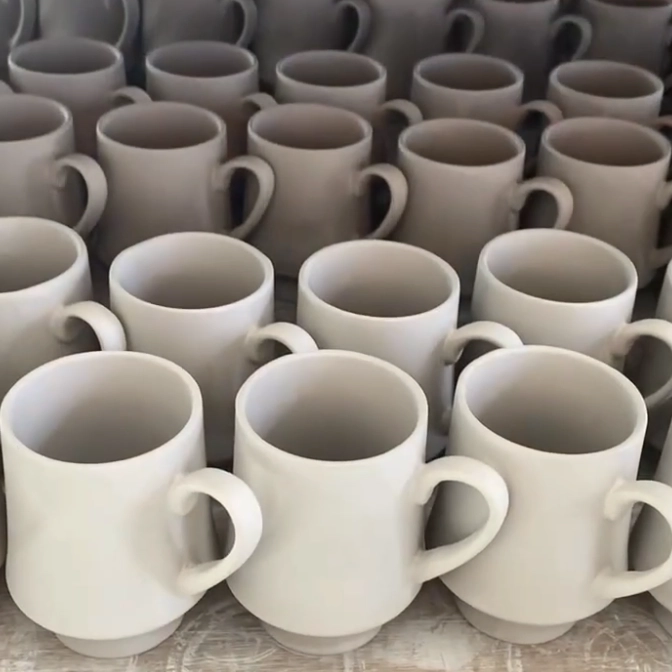
- التسليم الآلي: يقوم الناقل بتوصيل المنتج مباشرةً إلى محطة التجميع عند مستوى رطوبة ثابت، ويكون جاهزًا لتوصيل المقبض.
المقارنة الرئيسية: الأتمتة اليدوية مقابل الأتمتة المتكاملة
| الميزة | العملية اليدوية | خط التجفيف والتجفيف المتكامل |
| كثافة العمالة | عالية (التشكيل، الحمل، التثبيت) | منخفض (1 مشغل للخط بأكمله) |
| وقت التجفيف | 12 - 24 ساعة (غير خاضعة للرقابة) | 30 - 60 دقيقة (تحت السيطرة) |
| التعامل مع المنتج | “نقاط اتصال” متعددة (عالية المخاطر) | نقل بدون لمس عبر الناقل |
| المساحة المطلوبة | مساحة كبيرة لرفوف التجفيف | بصمة خطية مدمجة |
| الجودة المشتركة | متغير (بسبب الرطوبة غير المتساوية) | متفوقة (رطوبة موحدة = رابطة مثالية) |
لماذا يعتبر “المجفف المدمج” هو سر المقابض المثالية
التحدي الأكبر في التعامل مع الإرفاق هو مطابقة الرطوبة. إذا كان جسم الكوب جافًا جدًا وكان المقبض رطبًا جدًا، فسوف تتشقق الوصلة أثناء الحرق.
مع ناقل التجفيف المتكامل, فإننا نتخلص من هذا التخمين. تضمن الماكينة وصول كل جسم على حدة إلى نقطة التجميع مع نفس محتوى الرطوبة. هذه الدقة العلمية تقضي فعليًا على معدل رفض “المقبض المتصدع” الذي تعاني منه المصانع اليدوية.
الأثر المالي: ما وراء وفورات العمالة
في حين أن التوفير في الأجور أمر واضح، إلا أن العائد الحقيقي على الاستثمار (العائد على الاستثمار) للخط المتكامل يأتي من:
- سرعة دوران أسرع: تقليل مخزون “العمل الجاري” (WIP). نقل المنتجات من الطين إلى الفرن في نفس اليوم.
- كفاءة المساحة: تخلص من الحاجة إلى غرف تجفيف ضخمة مليئة بالرفوف.
- كفاءة الطاقة: تتميز مجففاتنا المدمجة بأنها معزولة ومصممة لإعادة تدوير الحرارة، مما يجعل تكلفتها أقل بكثير من تدفئة غرفة تجفيف كبيرة.
الخاتمة
ربط المقبض اليدوي ينتمي إلى عالم الفن; التلاعب الآلي المتكامل ينتمي إلى عالم التصنيع المربح. من خلال الجمع بين التشكيل والتجفيف والنقل في تدفق واحد سلس، يمكن لمصنعك تقديم منتجات عالية الجودة بتكلفة أقل ومهل زمنية أسرع بكثير.
هل أنت مستعد لترقية خط الإنتاج لديك؟ بصفتنا شركة رائدة في تصنيع ماكينات السيراميك، فإننا متخصصون في تخصيص الحلول الآلية التي تناسب تخطيط مصنعك المحدد.