
In the evolving ceramic industry, manufacturers are shifting from traditional manual processes to advanced ceramic machines to improve efficiency, consistency, and scalability. As a leading ceramic machine manufacturer, we’ve seen a global shift toward automation.
Is it time for your factory to make the switch? Let’s break down the differences between traditional manual methods and our latest automatic ceramic production lines.
1. High Efficiency & Output Consistency
The Manual Struggle: Manual production is limited by human fatigue and skill variance. A skilled worker might produce a few hundred pieces a day, but the consistency of thickness and weight often fluctuates.
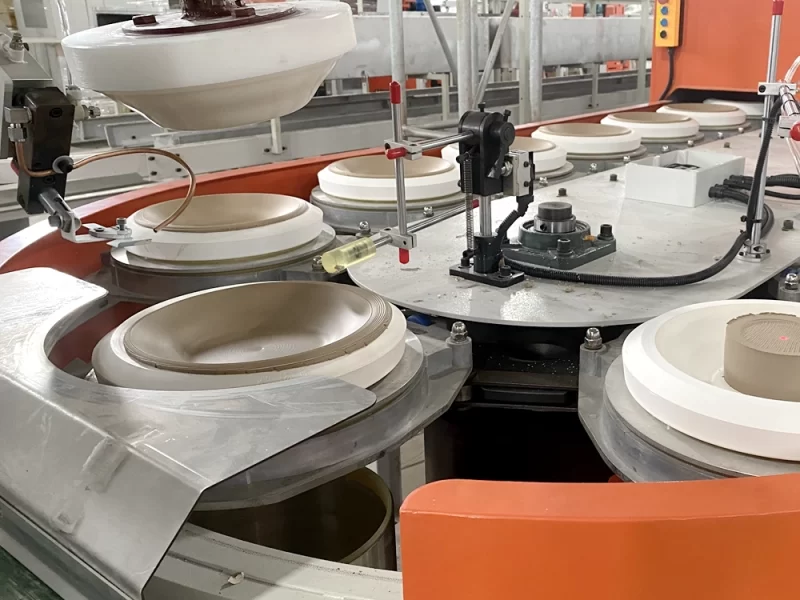
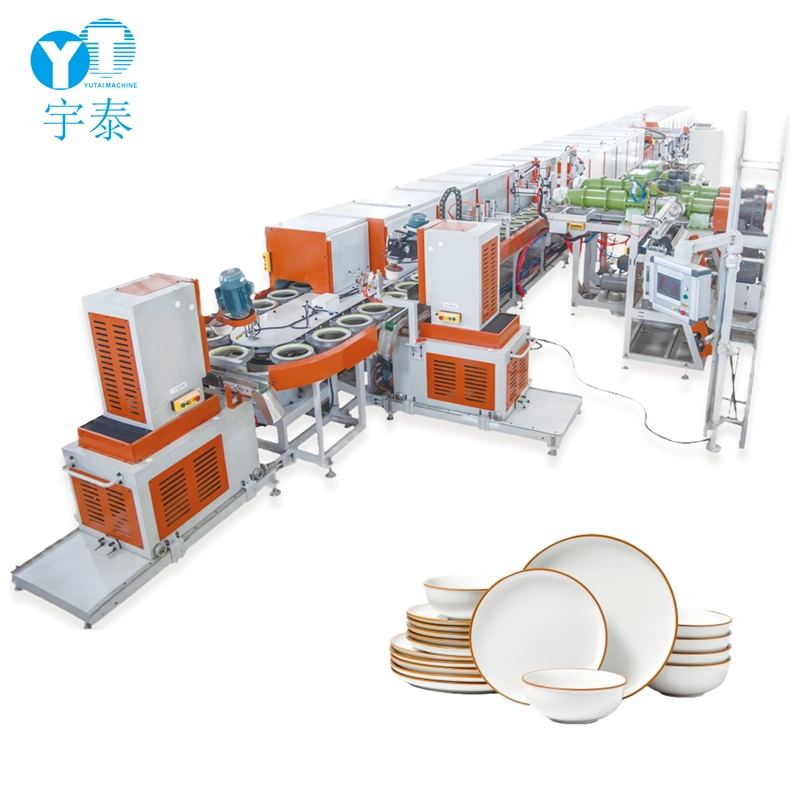
The Automated Solution: Our Automatic Ceramic Production Line (Disc/Bowl Type) integrates mud feeding, cutting, rolling, demolding, and drying into one seamless loop.
- Output: For standard bowls (6-7 inches), our Type 25 line reaches up to 1200 pcs/hour.
- Consistency: CNC precision ensures every piece has the exact same density and dimensions, drastically reducing the rejection rate.
2. Solving Complex Shapes: Rolling vs. Casting
Different products require different technical approaches. We have specialized our machinery to cover the entire spectrum of ceramic shapes.
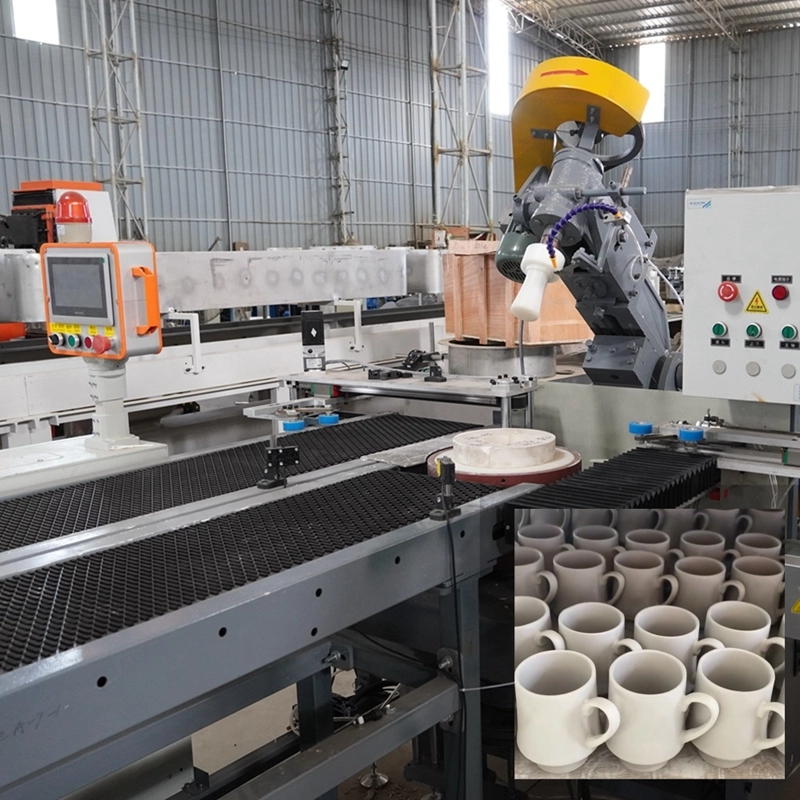
Automatic Rolling Line (For Cups with Handles)
Traditional cup making requires separate molding for the body and handle. Our Ceramic Jiggering Line simplifies this, allowing for the rolling of cups and flatware with high precision using PLC control systems and top-tier components like Japanese Toshiba motors.
Automatic Hollow Casting Line (For Vases & Teapots)
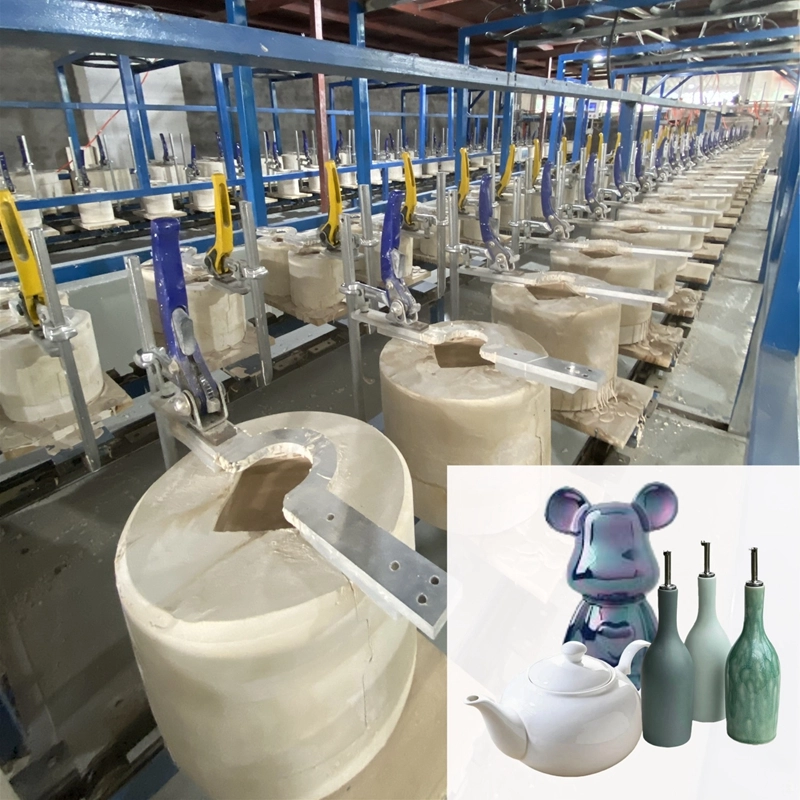
For complex items like teapots, wine bottles, or decorative ornaments, manual “slip casting” is messy and slow.
- Our Solution: The Auto Hollow Casting Production Line uses a vacuum mixing system and precise slurry injection.
- The Benefit: It achieves a 95% slurry recycling rate and creates complex curved surfaces with thin walls that are impossible to achieve consistently by hand.
3. Labor Costs and Workplace Safety
The ceramic industry is facing a “labor crunch.” Young workers are less willing to work in dusty, high-temperature environments.
- Labor Reduction: One of our integrated lines can replace 5 to 8 manual workers, allowing you to reallocate your budget to design and marketing.
- Environment: Our machines, such as the 304 Stainless Steel Vacuum Pug Mill, ensure a cleaner workspace with less dust and higher material purity.
4. Technical Comparison Table
| Feature | Manual Production | Our Automatic Lines |
| Speed | Slow & Variable | High-speed (Up to 1200 pcs/h) |
| Precision | Human Error Prone | CNC/PLC Controlled (±0.1mm) |
| Material Waste | High (Slurry spills/cracks) | Low (95% Slurry Recovery) |
| Drying | Weather Dependent | Integrated Dual-layer Stainless Steel Drying |
| Maintenance | N/A | Low (Uses NTN/SKF Bearings & SMC Pneumatics) |
Conclusion: The ROI of Automation
While the initial investment in an automatic ceramic production line is higher than hiring labor, the Return on Investment (ROI) is typically seen within 12-18 months through labor savings, energy efficiency (our burners use approximately 50,000-60,000 Kcal/hr), and increased market share due to superior product quality.
Whether you are producing daily-use tableware or intricate art pieces, automation is no longer a luxury—it’s a necessity for staying competitive in the global market.
Looking for a reliable ceramic machine manufacturer?
We provide customized automatic ceramic production lines, jiggering systems, and casting solutions tailored to your product and market.